

Hiring has always been one of the most time-consuming and resource-intensive functions in any organization. Recruiters spend countless hours screening resumes, scheduling interviews, and trying to find that elusive "right fit" among hundreds of applicants. As businesses scale and job markets become more competitive, traditional hiring methods are increasingly proving inadequate. This is where AI recruitment platforms come in, transforming the way companies discover, evaluate, and onboard talent.
What Is an AI Recruitment Platform?
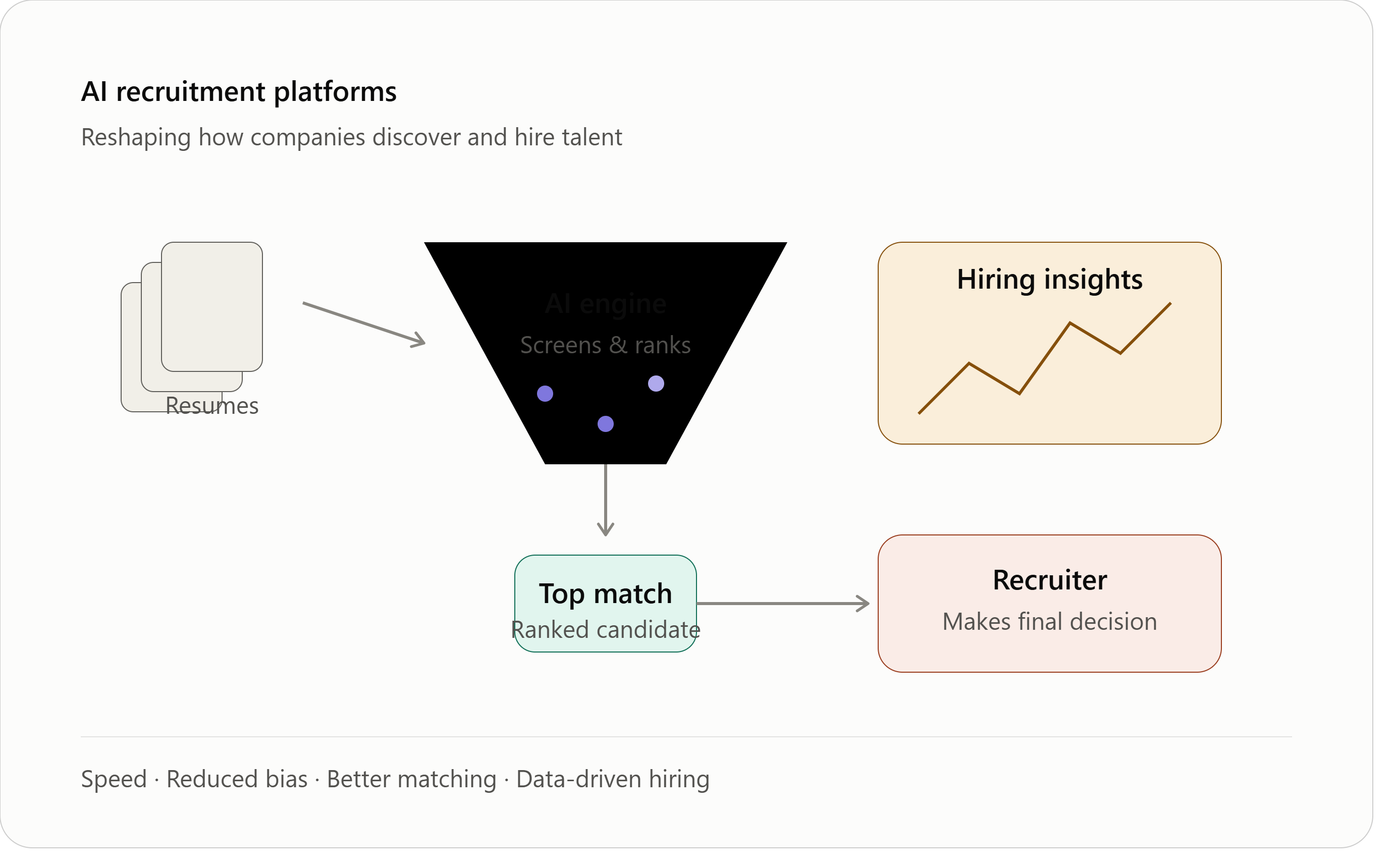
An AI recruitment platform is a software solution that uses artificial intelligence, machine learning, and natural language processing to automate and optimize various stages of the hiring process. From sourcing candidates and screening resumes to scheduling interviews and predicting candidate success, these platforms handle tasks that once required hours of manual effort, completing them in a fraction of the time with greater accuracy.
Unlike traditional applicant tracking systems that simply store and organize applications, AI-powered tools actively analyze data, learn from patterns, and make intelligent recommendations to help recruiters make better decisions faster.
Why Companies Are Turning to AI for Hiring
- Speed and Efficiency
One of the biggest advantages of AI recruitment platforms is the sheer speed at which they operate. Algorithms can scan thousands of resumes within seconds, identifying candidates who match specific job requirements far faster than any human recruiter could. This dramatically reduces time-to-hire, which is critical in competitive industries where top talent doesn't stay on the market for long.
- Reducing Unconscious Bias
Human decision-making is inherently susceptible to bias, whether conscious or not. Well-designed AI recruitment tools can help minimize this by focusing purely on skills, experience, and qualifications rather than factors like names, gender, or educational background that might unintentionally influence human reviewers. While AI isn't immune to bias if trained on flawed data, thoughtfully built platforms with regular audits can actually promote more equitable hiring outcomes.
- Improved Candidate Matching
AI doesn't just look for keyword matches between resumes and job descriptions. Advanced platforms use machine learning to understand context, assess transferable skills, and predict cultural and role fit based on historical hiring data. This leads to better quality hires and reduces costly mismatches that result in early turnover.
- Enhanced Candidate Experience
Modern AI recruitment platforms often include chatbots and automated communication tools that keep candidates informed throughout the hiring journey. Instant responses to queries, automated interview scheduling, and timely status updates create a smoother, more professional experience, something that significantly impacts how candidates perceive an employer's brand.
- Data-Driven Decision Making
AI platforms generate valuable analytics on hiring trends, source effectiveness, time-to-fill metrics, and more. Recruiters and HR leaders can use this data to continuously refine their hiring strategies, identify bottlenecks, and make informed decisions backed by evidence rather than guesswork.
Key Features to Look For
When evaluating AI recruitment platforms, organizations should consider several core capabilities, including resume parsing and screening, automated candidate sourcing across multiple channels, skills-based assessments, interview scheduling automation, predictive analytics for candidate success, and seamless integration with existing HR systems. The best platforms strike a balance between automation and human oversight, ensuring recruiters remain in control of final decisions while benefiting from AI-driven insights.
Addressing Common Concerns
Despite their benefits, some hiring professionals remain hesitant about adopting AI tools, often due to concerns about losing the human touch or fears that algorithms might overlook qualified candidates due to rigid filtering criteria. These concerns are valid and highlight why AI should be viewed as an assistant rather than a replacement for human judgment. The most successful implementations use AI to handle repetitive, data-heavy tasks while leaving relationship-building, cultural assessment, and final decision-making to human recruiters.
Transparency is also essential. Companies should choose platforms that clearly explain how their algorithms work and ensure compliance with data privacy regulations and anti-discrimination laws.
The Future of AI in Recruitment
As AI technology continues to evolve, recruitment platforms are becoming increasingly sophisticated, incorporating predictive analytics, video interview analysis, and even sentiment analysis to gauge candidate engagement. However, the goal remains the same: helping organizations find the right people faster and more efficiently while creating a fairer, more streamlined hiring process for candidates.
Final Thoughts
AI recruitment platforms are no longer a futuristic concept, they are quickly becoming a standard part of modern hiring strategies. By automating repetitive tasks, reducing bias, and providing data-driven insights, these tools empower HR teams to focus on what truly matters: building meaningful connections with the right talent. As adoption grows, companies that embrace AI-driven recruitment thoughtfully and responsibly will likely gain a significant competitive edge in attracting and retaining top talent.






Top comments (0)