

A year ago, most AI naming tools produced absolute garbage.
You’d type:
“YouTube channel about filmmaking”
And get:
- CineVerseX
- VisionaryMotionAI
- QuantumFrameLabs
Every result sounded like a startup that rented a neon office and burned investor money on branded hoodies.
The outputs feel different now.
AI naming systems finally understand internet culture better. Especially creator culture. They’ve absorbed years of YouTube branding patterns, Shorts naming trends, faceless channel styles, and creator-first language.
That changes how people build channels.
Naming used to happen last
Creators would:
- pick a niche
- buy a mic
- design thumbnails
- upload videos
- panic about the channel name later
Now the name comes earlier because creators think bigger from day 1.
A YouTube channel can become:
- a newsletter
- a paid community
- a media brand
- a consulting funnel
- a product business
- an AI education company
So people spend more time choosing handles that won’t feel embarrassing after 300 uploads.
Reasonable strategy honestly.
Internet history is filled with creators trapped inside usernames they made at 2 a.m. while eating instant noodles and pretending “xXSniperGodXx” sounded professional.
Prompt engineering quietly changed creator branding
This part is interesting.
The rise of AI prompts changed how creators brainstorm ideas entirely.
You don’t sit with a blank notes app anymore.
You iterate.
Fast.
A creator can type:
Generate 30 YouTube handle ideas for a faceless AI productivity channel.
Keep them short, brandable, easy to pronounce, and modern.
Avoid numbers and generic tech words.
Immediately you get naming directions.
Maybe 25 are bad.
But 5 might actually work.
That speed matters because naming is usually a filtering problem, not a creativity problem.
Most creators already have instincts. AI just speeds up exploration.
PromptZone readers probably noticed this already
AI-generated branding is becoming its own category.
People now use prompts for:
- startup naming
- podcast titles
- newsletter brands
- domain ideas
- YouTube handles
- social bios
- thumbnail hooks
And honestly, AI performs surprisingly well when the prompt includes cultural context.
That’s the missing piece.
Generic prompts create generic names.
Specific prompts create usable names.
The best prompts include creator identity
Weak prompt:
Generate YouTube names
Terrible.
The AI has no direction.
Better prompt:
Generate YouTube handle ideas for a creator making cinematic documentaries about AI startups and internet culture.
Style:
- short names
- memorable
- media-brand feel
- modern but human
- avoid startup clichés
- easy to spell
Completely different output quality.
You’re steering tone, rhythm, audience expectations, and internet aesthetics all at once.
That’s prompt engineering applied to branding.
Most AI-generated handles still fail for predictable reasons
The biggest issue: AI loves sounding futuristic.
You’ll constantly see names like:
- Nexora
- Quantiq
- SynthFlow
- Optivision The model keeps drifting toward Silicon Valley naming patterns because startup datasets polluted the internet for years.
Creators usually need names with more personality.
Especially YouTube creators.
A good YouTube handle sounds human enough to remember and clean enough to scale.
That balance matters.
YouTube handles became creator infrastructure
That sounds dramatic, but it’s true.
Your handle now affects:
- search recall
- collaboration visibility
- AI-generated search summaries
- cross-platform consistency
- audience memory
- comment recognition
People see your handle constantly:
- Shorts feeds
- comment sections
- livestream chats
- collab videos
- podcast descriptions
- creator shoutouts
A weak handle leaks attention every time it appears.
Faceless channels pushed AI naming harder
This trend exploded recently.
Faceless creators build channels around:
- AI explainers
- finance clips
- documentaries
- productivity systems
- motivation edits
- automation tutorials
Those creators usually want media-style branding instead of personal names.
That’s why AI naming tools became useful.
AI can rapidly generate:
- cinematic names
- editorial-style brands
- modern creator identities
- abstract media handles
Examples:
- FrameTheory
- PromptLayer
- NeuralDaily
- MotionGrid
- FutureLoop
Some sound clean immediately.
Others sound like energy drinks sold inside cyberpunk gas stations.
Filtering still matters.
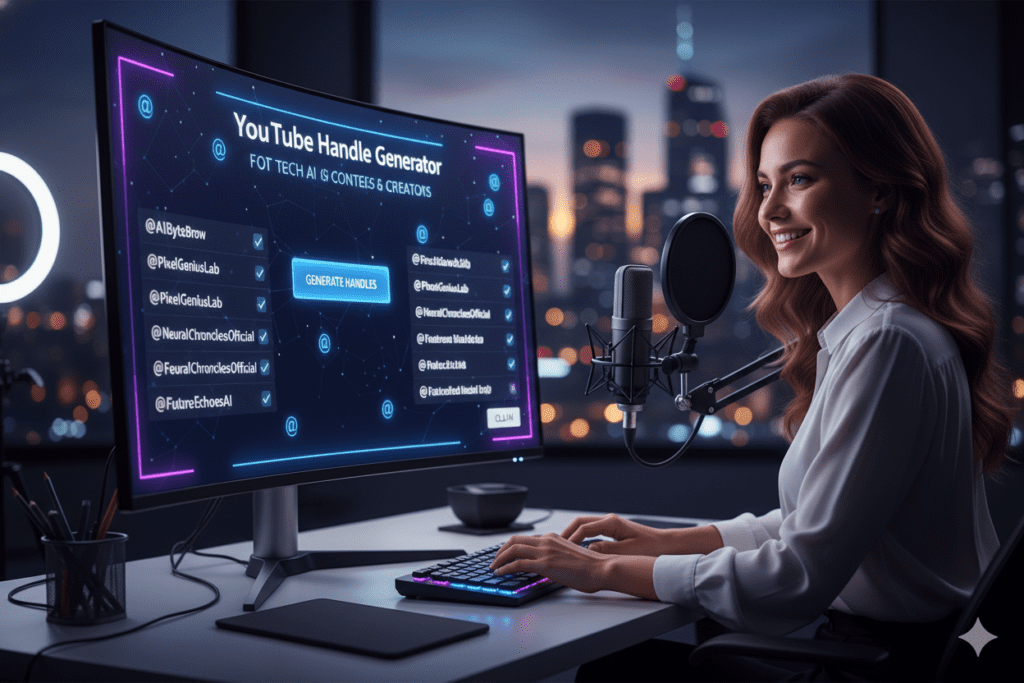
I tested several YouTube handle generators recently
Most felt lazy.
You could tell the systems recycled the same naming patterns repeatedly.
A lot of them generate names nobody would actually type into YouTube.
That’s why I spent time testing the YouTube handle generator from ytZolo.
The outputs felt more creator-aware than startup-aware.
Big difference.
I tested prompts around:
- gaming creators
- AI education
- finance Shorts
- faceless storytelling
- productivity channels
The names generally sounded usable on actual YouTube channels instead of fake SaaS demos.
That matters more than people think.
A technically “creative” name still fails if it feels awkward inside a comment section.
Prompt structure affects naming quality massively
Small wording changes shift outputs hard.
Example.
This prompt:
Generate names for an AI YouTube channel
creates broad generic results.
This prompt:
Generate short YouTube handles for a faceless creator making fast-paced AI tutorials for beginners.
Tone:
- modern
- memorable
- creator-first
- slightly cinematic
- avoid corporate naming
produces cleaner naming patterns immediately.
You’re teaching the model internet taste.
That’s the real skill now.
Good handles reduce friction
People remember simple names faster.
Your audience should:
- spell it correctly
- say it out loud
- recall it later
- search it easily
Every tiny friction point compounds online.
And creators underestimate compound friction constantly.
A difficult handle quietly weakens:
- referrals
- mentions
- collaborations
- repeat searches
You rarely notice it directly.
You just grow slower.
AI-generated creator branding will keep growing
Probably fast.
Because creators already use AI for:
- scripts
- thumbnails
- hooks
- captions
- editing workflows
- research
- idea generation
Branding naturally joined that workflow.
The funny part is that AI naming still works best when humans guide taste manually.
You still need instincts.
AI can generate volume.
You decide what feels human.
The strongest YouTube handles right now follow similar patterns
I keep seeing these formats work repeatedly.
Short media-style names
- FrameTheory
- EditLoop
- GrowthGrid
Personality hybrids
- AIWithSam
- CreateWithMaya
Clean descriptive handles
- FinanceSimplified
- CodingWithAlex
Editorial-style creator brands
- FutureDaily
- MotionTheory
You can almost predict channel aesthetics from the name alone now.
That’s branding doing its job properly.
Creator identity is getting compressed into smaller spaces
Your:
- handle
- profile picture
- thumbnail style
- editing rhythm
- intro pacing all combine into fast pattern recognition.
Audiences decide how they feel about creators within seconds.
Sometimes faster.
That’s why naming suddenly matters more than creators expected.
A clean handle creates familiarity before someone even watches the video.
And honestly, that tiny psychological advantage compounds across years of uploads.





Top comments (0)