

Building Better AI Tarot Prompts for Personalized Readings
Can AI make traditional tarot readings more interactive and personalized?
I've been exploring this question while building an AI-powered tarot reading platform.
One interesting challenge is that a generic LLM prompt often produces vague, repetitive interpretations.
The quality of the experience depends heavily on how you structure the prompt.
Here's a simple approach to generating more thoughtful tarot interpretations.
1. Give the AI a Clear Role
Instead of asking:
"Tell me what this tarot card means."
Try assigning a more specific role.
Example Prompt:
You are a thoughtful tarot guide who helps users explore personal questions through traditional tarot symbolism. Your interpretations should be empathetic, balanced, and reflective. Avoid claiming certainty about future events. Encourage users to consider different perspectives and make their own decisions.
This establishes the tone and boundaries of the reading.
2. Provide Structured Context
A useful tarot reading prompt can include:
- User's question
- Selected tarot cards
- Card positions
- Upright or reversed orientation
- Reading topic
- Preferred interpretation style
For example:
Prompt:
Interpret the following three-card tarot spread for self-reflection.
Question: What should I focus on in my career?
Past: The Fool
Present: The Magician
Future: The Star
Explain the traditional symbolism of each card, connect the three cards into a coherent narrative, and offer three practical reflection questions.
Avoid making guaranteed predictions about the future.
This produces a more structured interpretation than a simple one-sentence request.
3. Make the Interpretation Interactive
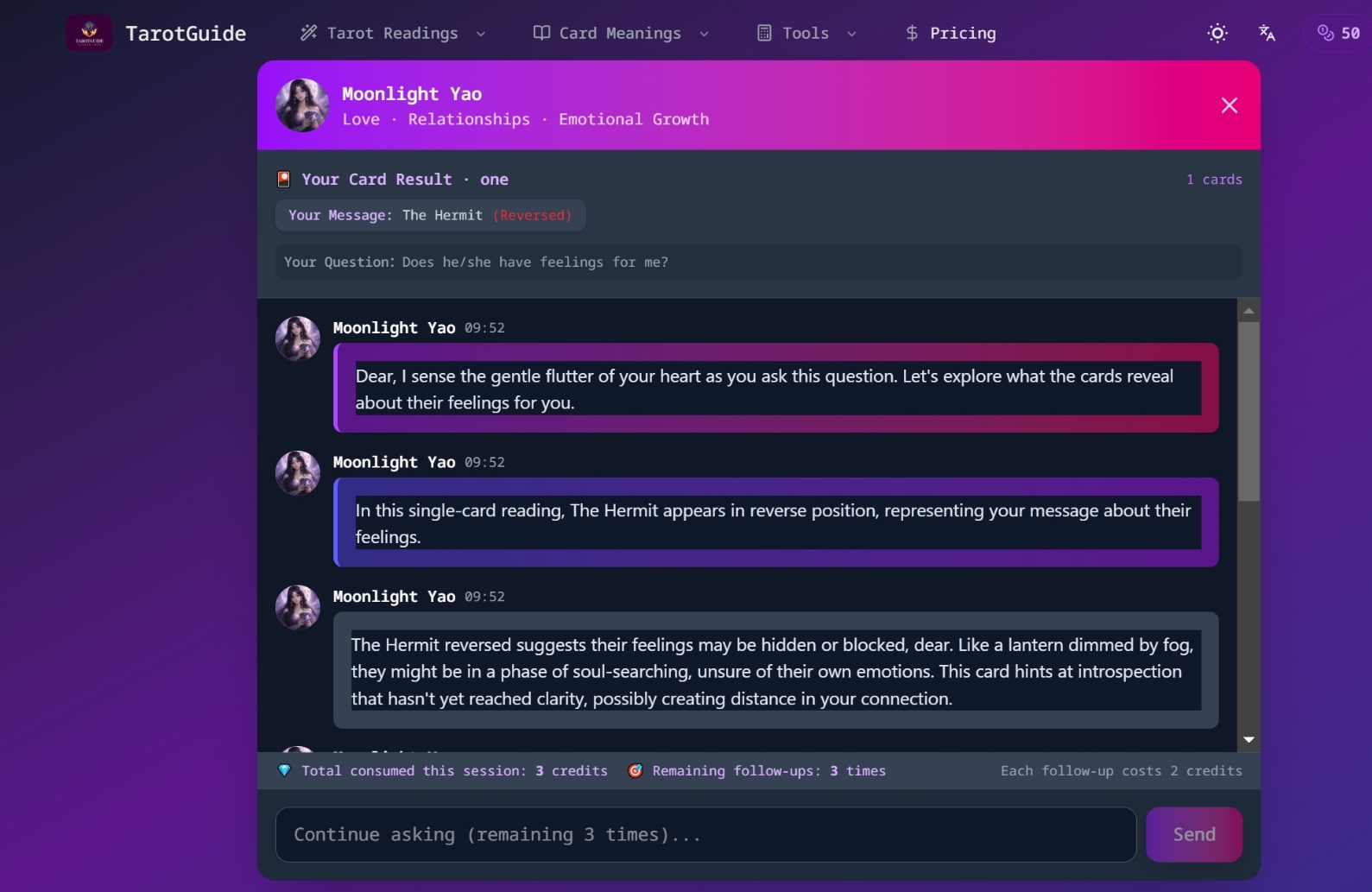
Another interesting approach is allowing users to ask follow-up questions.
For example:
- How does this card relate to my current situation?
- What alternative interpretations should I consider?
- What can I learn from this spread?
Follow-up conversations can help users explore the symbolism in greater depth.
4. Experiment with AI Tarot Readings
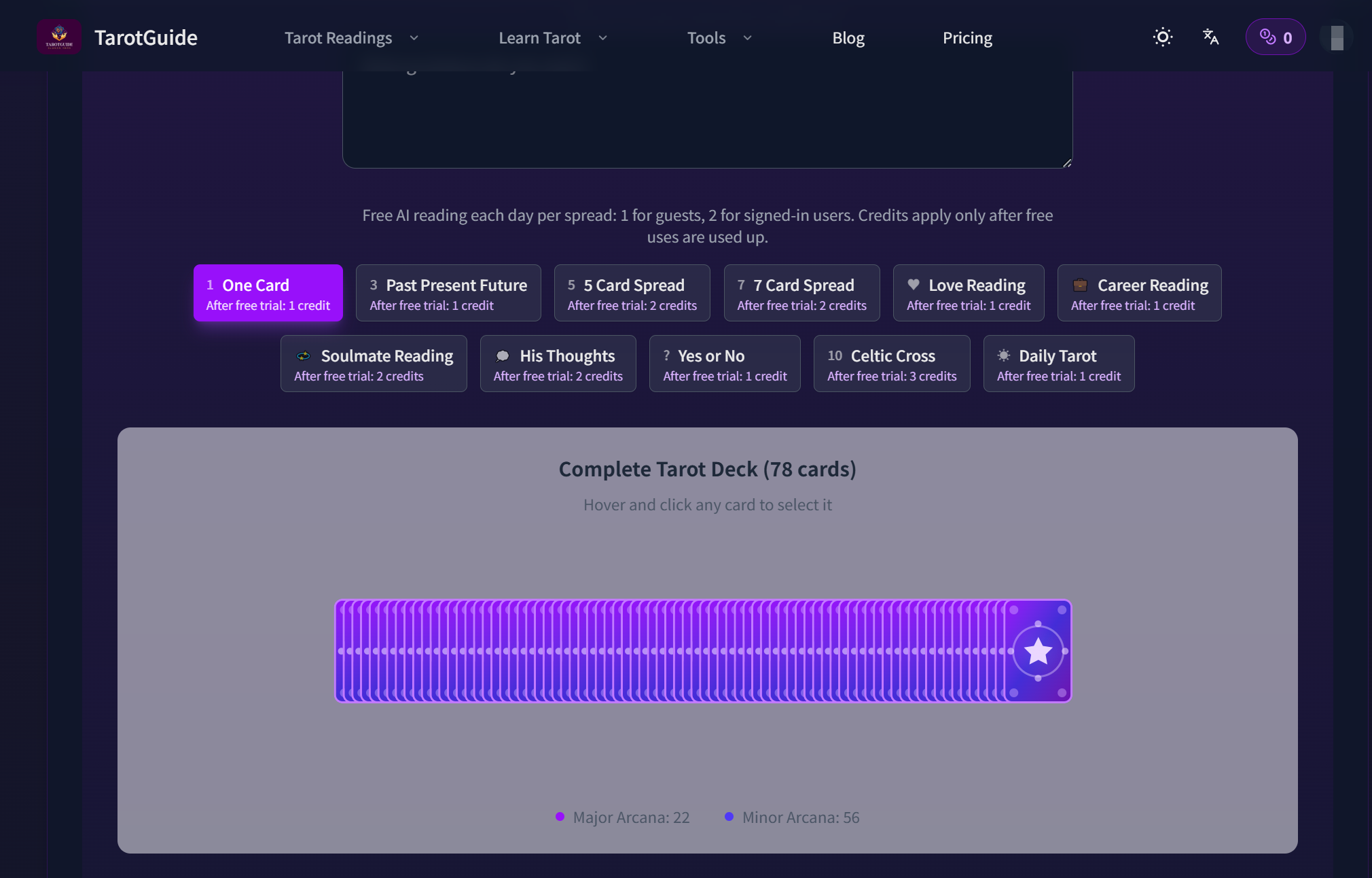
I've been developing TarotGuide, an AI-powered tarot platform that combines traditional tarot card meanings with conversational AI.
It includes:
- Free online tarot readings
- Multiple tarot spreads
- Love and career readings
- Two AI tarot reader personalities
- Interpretations of all 78 tarot cards
- Interactive card selection
You can explore the project here:
The goal is to create an engaging experience that uses AI to support personal reflection and entertainment.
5. Keep AI Interpretations Responsible
AI tarot systems should avoid presenting speculative interpretations as facts.
A good experience should:
- Encourage independent thinking
- Respect personal boundaries
- Avoid deterministic predictions
- Support reflection rather than replace professional advice
This is especially important when users ask about sensitive personal decisions.
Final Thoughts
AI-powered tarot is an interesting example of combining structured symbolic knowledge with generative language models.
It also highlights how prompt engineering can dramatically influence the user experience.
Question for the community:
What other traditional interactive experiences do you think could benefit from conversational AI?




Top comments (0)