

I work mostly on short-form marketing content, and lately I’ve been experimenting with LTX 2.3 to prototype ad scenes before actual production.
Honestly, I didn’t expect AI video tools to become this useful for pre-visualization workflows.
Instead of spending hours building rough storyboards manually, I started testing product shots and scene ideas directly inside LTX 2.3.
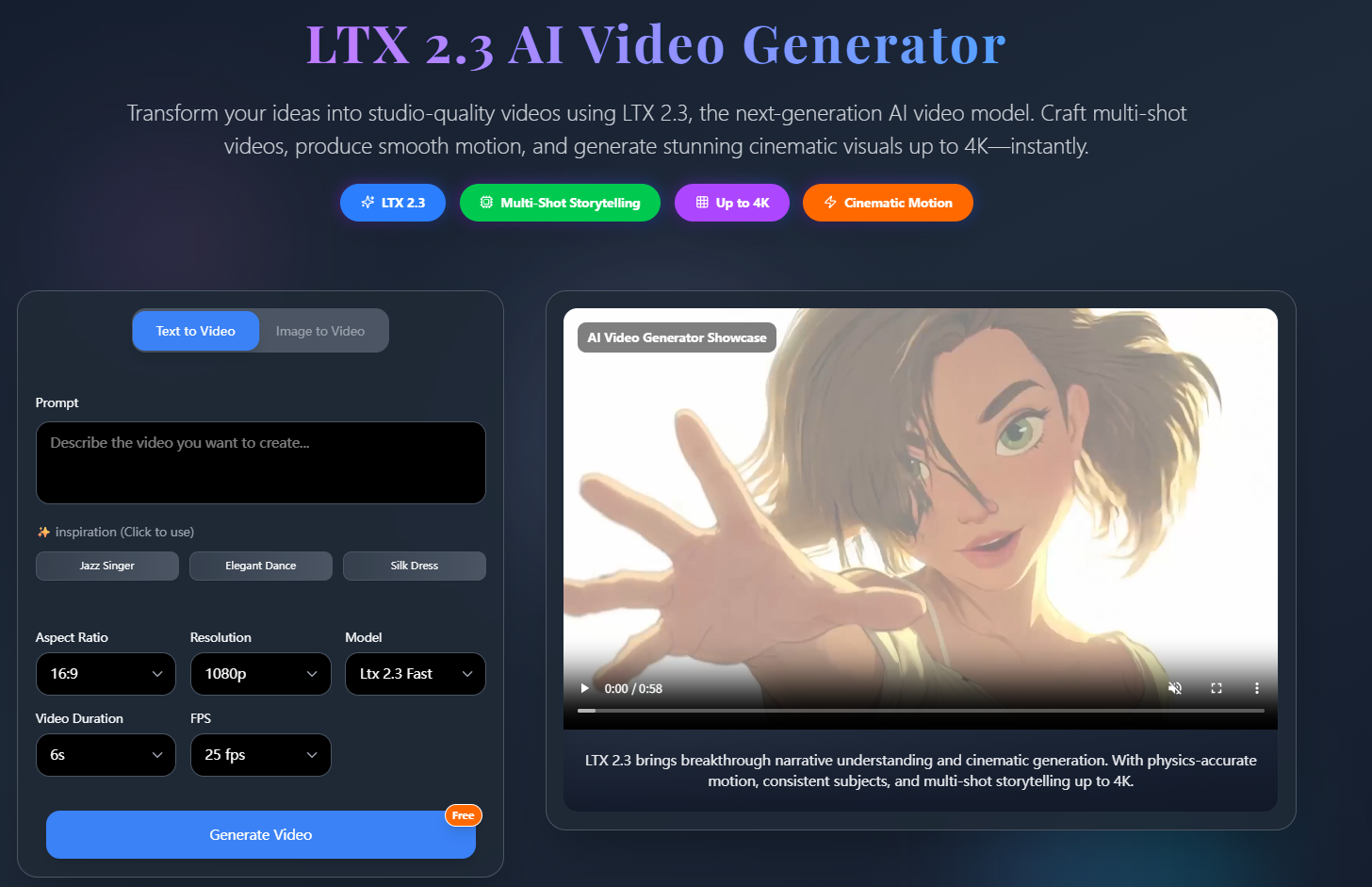
What I Tested
Mostly:
- fashion-style ad scenes
- cinematic product reveals
- perfume commercial concepts
- vertical social ads
- mood-heavy intro sequences
What surprised me most was how much prompt structure affected pacing and camera feel.
For example, this prompt felt too generic:
“luxury perfume ad”
But this worked much better:
cinematic close-up, luxury perfume bottle on reflective black surface, slow rotating camera movement, dramatic soft lighting, premium commercial aesthetic, shallow depth of field
The output immediately looked closer to a real ad mockup.
What Helped Most
A few things improved results a lot:
- describing camera movement first
- focusing on one visual idea per shot
- avoiding over-detailed prompts
- using cinematic lighting terms
- writing prompts like shot directions
It actually started feeling more like creative directing than “AI generation.”
Why I’m Still Using It
Right now I mainly use LTX 2.3 for:
- ad pre-visualization
- client moodboards
- social campaign concepts
- rapid scene ideation
- vertical video experiments
It’s obviously not replacing production yet, but it’s becoming surprisingly useful for creative planning workflows.
Curious whether other people are using AI video tools more for ideation or final production lately.





Top comments (0)