
Moonshot describes Kimi K3 as a 2.8-trillion-parameter model with a 1-million-token context window and a focus on long-horizon coding. That sounds ideal for repository work, but a large context window does not automatically produce a small, reviewable patch.
The more useful question is:
Can we make the model gather evidence, define boundaries, and review its own patch before a maintainer has to untangle it?
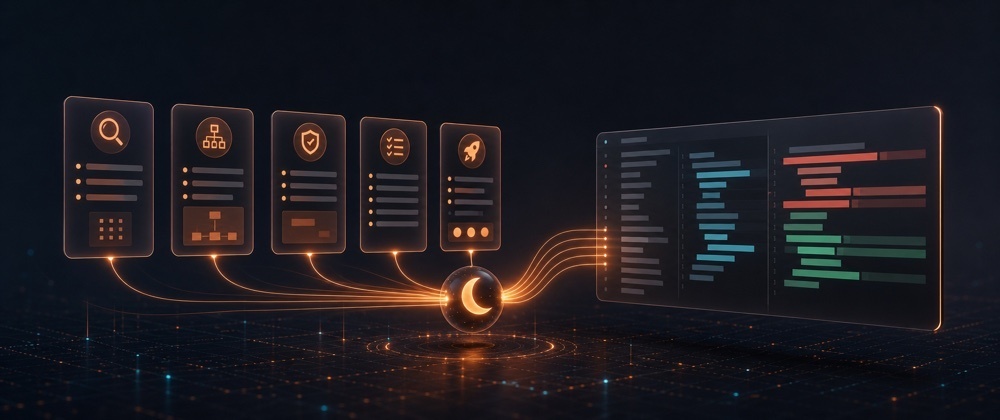
This tutorial turns that question into a five-prompt workflow. The prompts are free to copy, and they all target one practical job: making a bounded multi-file change without letting the model wander through the repository.
Disclosure: This post includes a referral link to Flaq AI. I may receive compensation if you sign up or purchase through it. The prompts and evaluation method are my own editorial work.
You can run the workflow in a browser or API through the Kimi K3 text-to-text route on Flaq AI. As of July 28, 2026, the page is marked “free to try” and lists the model ID as kimi-k3-text-to-text.
Why one giant coding prompt usually fails
A request such as “find the bug, fix it, and add tests” asks the model to perform discovery, diagnosis, planning, implementation, and review in one turn. If the initial diagnosis is wrong, every later step inherits the mistake.
Kimi's own launch notes identify a relevant limitation: K3 can be overly proactive when the task is small or ambiguous, so applications that need strict boundaries should add explicit behavioral constraints. A prompt stack is a practical way to add those constraints without turning one message into a wall of instructions.
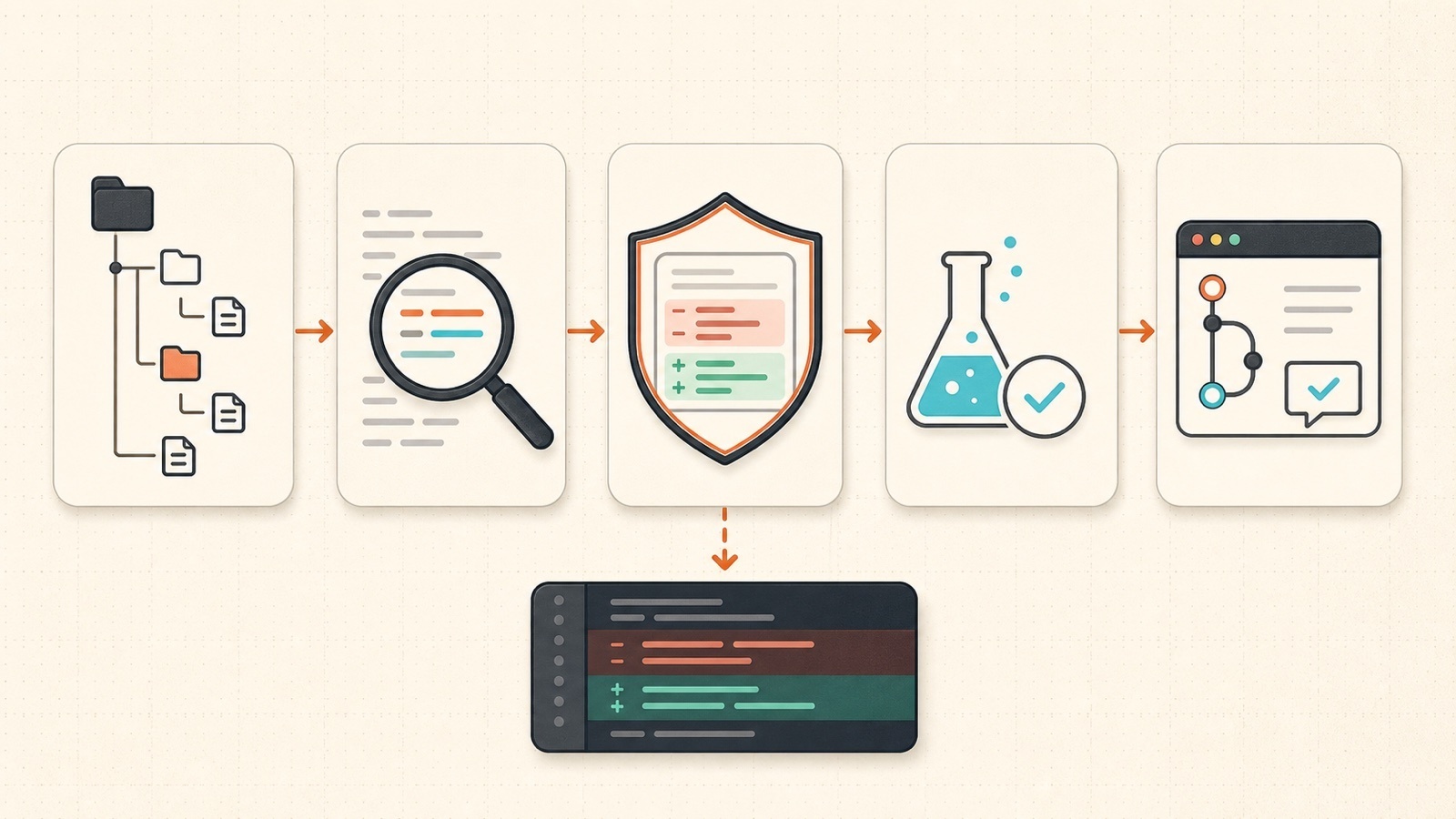
The five stages are:
- Map the relevant repository surface.
- Separate evidence from hypotheses.
- Agree on a patch contract.
- Produce the smallest patch and test plan.
- Review the result like a skeptical maintainer.
Do not send secrets, private keys, customer data, or proprietary code you are not authorized to process. The Flaq route discussed here is text-to-text, so provide only the non-sensitive tree, snippets, logs, and requirements needed for the task.
Prompt 1: Build a repository map before proposing code
Use this first. It prevents the model from inventing architecture around one isolated snippet.
You are in repository-orientation mode. Do not propose or write a patch yet.

Task:
<TASK>

Repository tree:
<RELEVANT_TREE>

Files and logs provided:
<FILES_AND_LOGS>

Return:
1. A scope map of the relevant files and what each file appears to control.
2. The likely execution path, citing file paths and symbols from the supplied evidence.
3. Known facts, open questions, and hypotheses in separate sections.
4. The smallest additional evidence request needed before diagnosis.

Rules:
- Never invent a file, symbol, command, dependency, or runtime result.
- Label every unsupported idea as a hypothesis.
- If the evidence is insufficient, stop after requesting the missing material.
The best output is not a fix. It is a short map that a human can verify.
Prompt 2: Force an evidence gate
After supplying any requested files or logs, make Kimi K3 test its own diagnosis.
Work only from the repository evidence in this conversation.

For each plausible root cause, provide:
- evidence supporting it, with file path and symbol;
- evidence against it;
- confidence: low, medium, or high;
- one test or observation that would falsify it.

Then select the leading diagnosis only if it has direct evidence.

Do not write code yet.
Do not treat naming patterns or framework conventions as proof.
If the required evidence is outside the supplied material, request it explicitly.
This step is deliberately repetitive. It is cheaper to reject a weak hypothesis now than to review a polished patch built on it.
Prompt 3: Create a patch contract
Once the diagnosis is supported, define the boundary of the change.
Create a patch contract for the confirmed task.

Return exactly these sections:

ALLOWED FILES
- files that may change and why

FORBIDDEN CHANGES
- dependencies, public APIs, schemas, generated files, formatting-only edits,
  and unrelated refactors that must not change

INVARIANTS
- behavior that must remain true

ACCEPTANCE CRITERIA
- observable conditions for accepting the patch

TEST PLAN
- the smallest focused tests, plus one relevant regression check

ROLLBACK
- how to revert or disable the change safely

If one missing decision blocks a safe contract, ask that question and stop.
Otherwise end with: CONTRACT READY
The first three prompts establish the map, evidence, and boundaries. Only then should the workflow move to implementation and adversarial review.
Prompt 4: Generate the minimum patch
Paste the approved contract above this prompt. If the model cannot run your tests, require commands and expected signals rather than a fictional “all tests passed.”
Implement the approved patch contract.

Output in this order:
1. A one-paragraph implementation plan.
2. The patch, grouped by file.
3. A short reason for every changed file.
4. Exact test commands for a human or CI runner.
5. Expected success signals and likely failure signals.
6. Any assumption that still needs human verification.

Constraints:
- Change only files listed under ALLOWED FILES.
- Prefer the smallest behaviorally complete change.
- Do not perform cleanup, renaming, dependency upgrades, or unrelated refactors.
- Do not claim a command was executed unless its actual output is present.
- If the contract cannot be satisfied safely, stop and explain the conflict.
Prompt 5: Review the patch as a skeptical maintainer
Run this in a fresh message with the task, contract, and proposed diff.
Act as a skeptical repository maintainer. Review the proposed patch against
the original task and the approved patch contract.

Check:
- whether every changed line is necessary;
- whether any file or symbol was invented;
- boundary cases, error paths, concurrency, security, and performance;
- whether tests prove the requested behavior rather than the implementation;
- whether public behavior changed accidentally;
- whether the explanation matches the actual diff.

Return:
1. BLOCKERS
2. NON-BLOCKING RISKS
3. MISSING TESTS
4. UNRELATED CHANGES TO REMOVE
5. VERDICT: ACCEPT, REVISE, or REJECT

If the verdict is REVISE, provide only the smallest correction plan.
Do not rewrite the entire patch unless a blocker requires it.
This final pass does not make the patch trustworthy by itself. It creates a second opportunity to catch scope drift before human review.
Calling the text route from JavaScript
Flaq exposes the model through its chat-completions endpoint. Keep the API key in an environment variable and send one prompt-stage at a time.
const response = await fetch(
  "https://api.flaq.ai/api/v1/chat/completions",
  {
    method: "POST",
    headers: {
      Authorization: `Bearer ${process.env.FLAQ_API_KEY}`,
      "Content-Type": "application/json",
      Accept: "application/json",
    },
    body: JSON.stringify({
      model: "kimi-k3-text-to-text",
      messages: [
        {
          role: "system",
          content:
            "Follow the requested stage only. Cite supplied evidence, respect the patch contract, and never invent tool results.",
        },
        {
          role: "user",
          content: promptForCurrentStage,
        },
      ],
      stream: false,
    }),
  }
);

if (!response.ok) {
  throw new Error(`Flaq request failed: ${response.status}`);
}

const data = await response.json();
console.log(data);
The model's official 1-million-token context is a ceiling, not a reason to paste an entire repository. A smaller evidence bundle is easier to review, cheaper to resend, and less likely to bury the decisive line.
How to tell whether the prompt stack helped
Test the workflow on a fixed commit and a task with a verifiable outcome. Keep the same files, logs, constraints, and test commands when comparing it with a one-shot prompt.
Record:
- fabricated file or symbol references;
- files changed outside the approved scope;
- focused and regression test results;
- number of repair turns;
- minutes of human review;
- whether the final patch would actually be merged.
The useful metric is not “the response looked smart.” It is accepted patches with fewer unsupported claims and less review work.
Where this workflow fits
This stack is most useful for bugs and changes that cross a small number of related files: an authentication race, a cache invalidation path, a serializer mismatch, or a service and its focused tests.
It is less useful for a one-line autocomplete request. It also does not replace sandboxing, CI, secret scanning, dependency review, or an experienced maintainer. Prompt structure can reduce ambiguity; it cannot guarantee correct code.
FAQ
Can Kimi K3 read my entire repository through this Flaq page?
The route accepts text messages. You must supply the relevant tree, code, logs, and requirements yourself or build that selection into your application. Do not assume repository access, terminal tools, or visual input from the capabilities of other Kimi products.
Is Kimi K3 free?
Flaq currently labels this route “free to try,” while usage beyond any trial is priced by input and output tokens. Trial quotas and live prices can change, so check the model page before a large evaluation.
Do these prompts guarantee a correct patch?
No. They create checkpoints that make unsupported reasoning and scope drift easier to detect. You still need tests, security controls, and human review.
Final takeaway
Kimi K3's long context is most valuable when the workflow keeps that context organized. Mapping, evidence gating, contracting, patching, and adversarial review give the model five smaller jobs instead of one vague mandate.
If you want to reproduce the workflow, try the Kimi K3 coding route on Flaq AI with a non-sensitive repository sample. Start with Prompt 1, refuse invented evidence, and judge the result by the patch you would actually merge.


Top comments (0)