

Introduction
A software release is the result of many connected activities. Developers write and review code. Product teams define requirements. Testers check behaviour. Operations teams manage environments. Leaders need a clear view of delivery progress.
The challenge is that these activities often happen in different systems. Each system records one part of the work. Teams must connect those records before they can understand the full release.
A software release tracking tool helps organise this information. It can connect planned work with development and deployment records. A release intelligence platform adds context by comparing evidence across engineering systems.
Reloqui.com focuses on this wider view of release governance. It brings together information about planned work, merged code and running software. This helps teams examine release records with greater clarity.
The Role of Governance in Software Releases
Release governance means setting clear rules for preparing, reviewing and publishing software releases. It helps teams understand responsibilities and required evidence.
Good governance does not need to slow down development. Instead, it gives teams a repeatable process. People can see what needs review and which records support a decision.
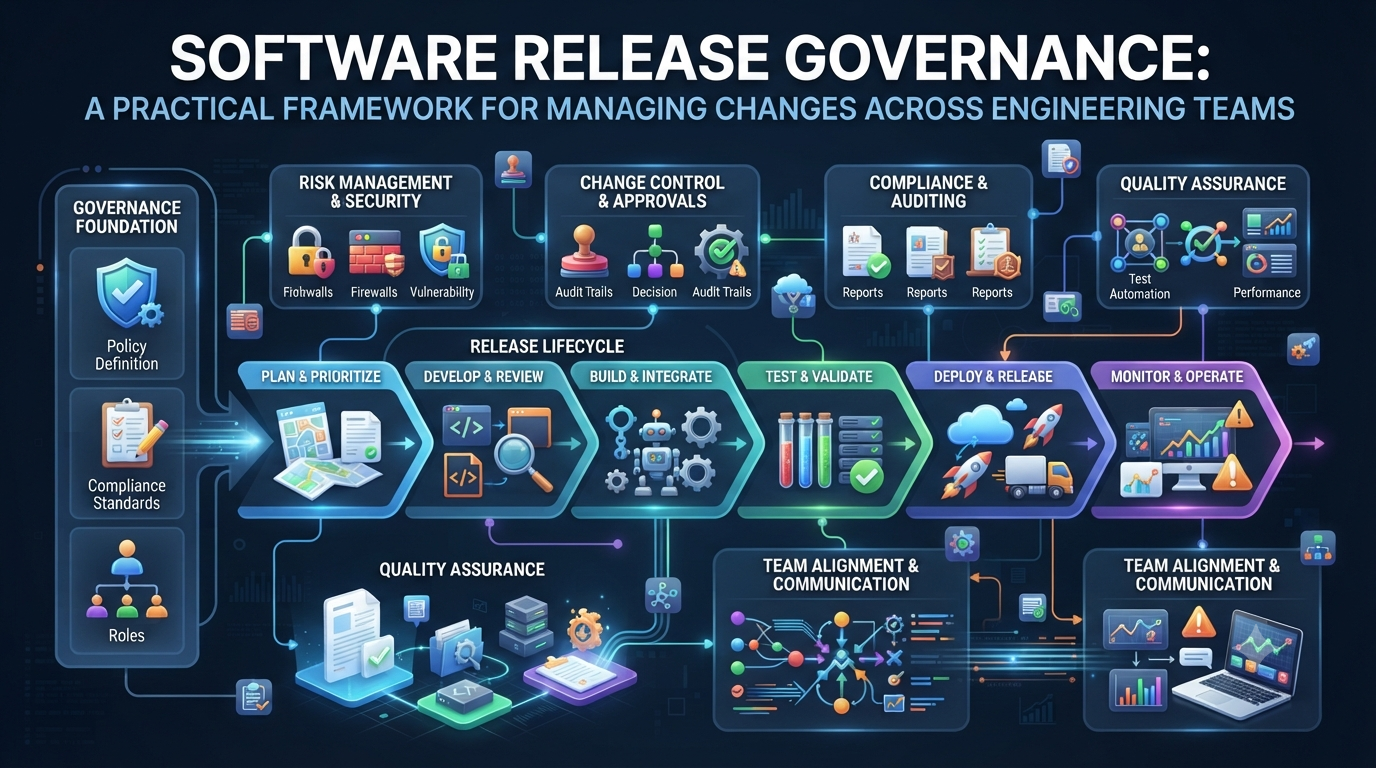
A release process may involve several stages:
- Planning the work included in a release.
- Connecting requirements with development activity.
- Reviewing builds and generated artifacts.
- Checking deployment information.
- Preparing release communication.
- Collecting required approvals.
- Preserving records for later review.
A software release tracking tool can organise these stages. It gives teams a shared view of release activity. A release intelligence platform can also help identify differences between planned work and actual engineering evidence.
The aim is not to replace existing tools. It is to make their information easier to understand together.
Creating a Reliable Record of Every Release
Release records should explain what a release contains. They should also show where the supporting information came from.
A basic tracking system may store a release name, date and status. A more complete software release tracking tool connects the release with issues, pull requests, builds, artifacts and deployments.
Consider a team preparing a new payment reconciliation feature. The product team creates requirements. Developers complete related code changes. The CI/CD pipeline creates an artifact. Operations staff deploy it to the required environment.
Each system holds a different record. A software release tracking tool connects these records so reviewers can follow the delivery process.
This connection is important because one status cannot prove every stage is complete. A task may be closed even when its code has not reached production.
A useful tracking process should therefore show both confirmed relationships and missing information.
How a Release Intelligence Platform Connects Evidence
A release intelligence platform helps teams understand how engineering records relate to each other. It compares information from connected systems instead of relying only on manual release updates.
For example, Jira may show the work planned for a release. GitHub may show which changes were merged. Deployment records may show what is running in an environment.
These records can tell different stories. Some planned work may not have a matching code change. A merged change may not have a confirmed deployment.
A release intelligence platform helps expose these differences. It can create a more explainable view of the release.
Reloqui reconciles information from tracked issues, merged pull requests, builds, artifacts and deployments. Its process uses deterministic matching first, followed by heuristic matching where needed.
The system also provides signals that explain changes in confidence. This makes uncertainty easier to examine.
A release intelligence platform should not hide weak evidence behind a simple status label. Reviewers need to understand how a conclusion was reached.
Preserving Decisions with a Software Release Audit Trail
A software release audit trail keeps a record of release-related activity and its supporting evidence. It helps teams examine the history of a release after delivery.
A useful record may contain:
- The work planned for the release.
- Related issue and task details.
- Merged code changes.
- Build and artifact information.
- Deployment records.
- Approval activity.
- Relevant changes to release evidence.
A software release audit trail helps answer questions during internal reviews. It can also support investigations when a release behaves differently than expected.
For example, an operations team may need to examine which changes were included in an earlier deployment. The team can use the recorded links to follow the relevant release history.
Reloqui creates release records from stored engineering evidence. It also supports frozen release snapshots. These preserve a view of release information at a particular point.
A software release audit trail is not proof that software has no defects. It shows the records behind release activity. Testing, security checks and operational controls remain necessary.
Making Release Communication Easier to Maintain
Release communication is important for both technical and non-technical teams. Different readers need different levels of detail.
Executives may want a summary of major changes. Developers may need technical details. Operations teams may need deployment context. Product teams may focus on user-facing improvements.
An automated release notes generator can help prepare these summaries. It uses available release information to create structured content.
A useful automated release notes generator should connect its statements with supporting records. It should not turn incomplete task updates into unsupported claims.
Reloqui supports five audience-focused narratives:
- Executive summaries.
- Engineering details.
- Operations information.
- Product-focused explanations.
- Compliance-oriented records.
This approach helps teams prepare communication for different readers. An automated release notes generator can reduce the need to collect every detail manually.
However, human review still matters. Teams should check accuracy, wording and audience needs before publishing release notes.
Evaluating Release Readiness Before Publication
A release can appear complete while important evidence is still missing. A task may be finished, but its related code may be unclear. A build may exist without a confirmed deployment record.
Release readiness assessment software helps teams review these conditions. It gives reviewers a structured way to examine the information available before making a decision.
A readiness review may consider:
- Whether planned work has supporting code records.
- Whether relevant pull requests are merged.
- Whether builds and artifacts are recorded.
- Whether deployment information is available.
- Whether important relationships remain uncertain.
- Whether required approvals are complete.
Release readiness assessment software should explain the reason behind its readiness view. A simple status cannot show every missing record or uncertain connection.
Reloqui uses confidence scoring to describe the strength of available release evidence. It also shows signals that can raise or lower confidence.
The score is a guide to evidence strength. It does not guarantee software quality, safety or successful operation.
Teams should use release readiness assessment software alongside their own testing, security reviews and operational checks. These activities address different parts of release risk.
Applying Rules Through Release Approval Workflows
Release approvals should follow clear rules. A team may need technical review before publishing. Another organisation may require additional compliance sign-off.
Release approval workflow software helps organise these steps. It can define approval conditions and make review responsibilities visible.
For example, an organisation may set a minimum confidence threshold for publishing release information. It may also require a named reviewer to approve the release.
Good release approval workflow software should explain which conditions apply. Reviewers should know why an approval is required and what evidence supports the decision.
Reloqui supports policy gates that can block publishing below a configured confidence threshold. It can require sign-off and automatically suspend approvals if late evidence lowers confidence.
This matters because release information can change after an initial review. A new deployment record or corrected issue link may affect the release picture.
Release approval workflow software helps teams manage these changes through defined controls. It does not remove the need for people to make responsible decisions.
Connecting Planning and Development with GitHub Jira Release Tracking
Many engineering teams use separate systems for planning and source control. Jira often holds work items, while GitHub stores code and pull request activity.
GitHub Jira release tracking connects these two views. It helps teams understand which development changes relate to planned tasks.
For example, a team may create a Jira issue for a new customer export feature. A developer then opens a GitHub pull request linked to that issue. After review, the code is merged.
The relationship helps reviewers see which planned work has matching development evidence.
However, a merged pull request does not prove that the change was deployed. GitHub Jira release tracking becomes more useful when connected with build and deployment information.
Reloqui reconciles planned Jira work with Git activity and deployment evidence. This helps teams identify gaps between planned work and recorded delivery.
Reliable GitHub Jira release tracking should also make uncertain matches visible. A reviewer should be able to examine the evidence rather than assume every relationship is correct.
Understanding Delivery Through a CI/CD Deployment Tracking Dashboard
CI/CD systems automate parts of software building, testing and deployment. They produce records that help teams understand how software moves through delivery stages.
A CI/CD deployment tracking dashboard gives teams a shared view of this activity. It can help them review build results, artifacts and deployment records.
However, pipeline success and release completion are not always the same. A pipeline may finish successfully while other planned changes remain incomplete.
A useful CI/CD deployment tracking dashboard should connect pipeline information with the wider release record.
Teams may need to review:
- Which build produced a particular artifact.
- Which release includes that artifact.
- Which environment received the deployment.
- Which code changes relate to the release.
- Whether later evidence changed the recorded status.
A CI/CD deployment tracking dashboard becomes more useful when it connects these details with planning and source control records.
Reloqui uses build, artifact and deployment evidence as part of its release reconciliation process. This helps teams understand the relationship between engineering activity and running software.
Following Changes with Software Release Change Traceability
Change traceability means connecting a software change with the records that describe its journey. It helps teams understand how a requirement became part of a release.
Software release change traceability may connect:
- A product requirement.
- A development issue.
- A pull request.
- A build record.
- An artifact.
- A deployment record.
For example, a team may update an access control rule. The requirement explains the expected behaviour. The pull request records the code change. The build creates an artifact. The deployment record shows where the artifact was released.
Software release change traceability helps reviewers follow this path. They can identify missing links and examine the records behind a change.
Reloqui includes a catalogue and dependency graph for products, services, environments and upstream or downstream dependencies. These relationships can help teams understand potential impact across connected systems.
Software release change traceability is useful for technical reviews and release investigations. It does not replace testing or security assessment.
Selecting Self-Hosted Release Management Software
Organisations have different infrastructure and data management needs. Some prefer managed services. Others want to operate software within their own environment.
Self-hosted release management software allows an organisation to manage where the application runs. This can help teams align deployment with internal infrastructure policies.
Before choosing a solution, organisations should examine:
- Infrastructure and hosting requirements.
- Data storage and access controls.
- Connector availability.
- Upgrade and maintenance responsibilities.
- Internal support capacity.
- Security and operational processes.
Self-hosted release management software gives teams control over their deployment environment. However, the organisation must also manage the responsibilities that come with self-hosting.
Reloqui offers a self-managed deployment with its full feature set. It also provides a managed enterprise option with dedicated infrastructure and support.
The right choice depends on internal policies and available technical resources. Self-hosted release management software should fit the organisation's wider operating model.
Matching Release Capabilities to Team Requirements
Different teams may value different parts of release governance. The following table connects common requirements with useful capabilities.
| Need | What to Look For | Who It Helps |
|---|---|---|
| Organised release records | Links between tasks, code and deployments | Developers and release managers |
| Historical evidence | A clear software release audit trail | Compliance and engineering teams |
| Consistent communication | An automated release notes generator | Product and communication teams |
| Readiness reviews | Evidence quality and visible gaps | Engineering leaders |
| Controlled publishing | Clear approval rules and sign-offs | Managers and compliance teams |
| Deployment visibility | Connected build and environment records | Operations teams |
| Infrastructure control | Flexible hosting and deployment options | Platform and security teams |
Common Release Governance Mistakes
A release process can become difficult to manage when teams depend on incomplete records or unclear responsibilities.
Common mistakes include:
- Treating task completion as deployment proof: A closed issue does not confirm that the change is running.
- Using manual status updates as the only evidence: Updates can become outdated when systems change.
- Ignoring missing relationships: Unlinked issues or pull requests can make release contents unclear.
- Assuming pipeline success means full readiness: A successful build does not confirm every release requirement.
- Writing release notes without checking records: Summaries may contain incomplete or incorrect details.
- Approving releases without clear conditions: Reviewers need to understand the rules behind each decision.
- Treating confidence as a safety guarantee: Evidence strength and software quality are different things.
- Overlooking service dependencies: A change may affect other connected services.
- Failing to preserve release history: Teams may struggle to reconstruct earlier decisions.
- Ignoring ownership: Every important review and approval should have a clear responsible person.
A software release tracking tool can help reduce these gaps when it connects real engineering records. Teams should also define ownership and review rules.
A Fictional Example: Managing a Logistics Platform Update
Consider a fictional logistics company preparing an update to its shipment scheduling platform. The release includes changes to delivery windows, driver notifications and route planning.
The product team records requirements in Jira. Developers create code changes in GitHub. The CI/CD system builds the application and produces deployment artifacts.
During the release review, the team finds that one planned change has no clear link to a merged pull request. Another change has a build record but no confirmed deployment evidence.
A software release tracking tool helps organise the available records. A release intelligence platform compares the planned work with code and deployment evidence.
The team reviews its software release audit trail to understand the history. An automated release notes generator prepares summaries for product, operations and engineering readers.
Next, release readiness assessment software helps reviewers examine the evidence. Release approval workflow software applies the organisation's publishing rules.
The team also checks GitHub Jira release tracking relationships and its CI/CD deployment tracking dashboard. These views help clarify which changes have supporting delivery records.
Finally, software release change traceability helps reviewers follow the shipment scheduling changes. If the company requires internal hosting, it may evaluate self-hosted release management software as part of its wider infrastructure plan.
This fictional example shows how connected records can support release reviews. It does not represent a real Reloqui customer or measured result.
How Reloqui.com Supports Release Governance
Reloqui.com focuses on making release information easier to explain and review. It connects evidence from engineering systems to build a reconciled view of each release.
Its capabilities include:
- Evidence reconciliation: Connects tracked issues, merged pull requests, builds, artifacts and deployments.
- Confidence scoring: Shows signals that affect confidence in release information.
- Frozen snapshots: Preserves release records for review at a particular point.
- Audience-specific narratives: Provides views for executive, engineering, operations, product and compliance teams.
- Policy gates: Supports confidence thresholds, required sign-offs and approval suspension when evidence changes.
- Dependency visibility: Helps teams examine relationships between products, services and environments.
- Deployment choices: Offers self-managed and managed enterprise options.
Reloqui supports connectors across engineering systems. These connections are intended to work with existing tools, not replace source control, issue tracking, CI/CD, testing or security systems.
For teams managing complex delivery processes, connected evidence can make release information easier to inspect. Reloqui.com provides an approach centred on explainable records and visible relationships.
Frequently Asked Questions
1. What information should a software release tracking tool collect?
A software release tracking tool should connect release details with relevant engineering records. These may include issues, pull requests, builds, artifacts and deployments. The goal is to provide a clear view of release contents. Teams should also be able to identify missing records and uncertain relationships.
2. Can a release intelligence platform work with existing engineering systems?
Yes, when it provides suitable connectors. A release intelligence platform can gather information from tools already used by development and operations teams. It should connect their records without requiring organisations to replace source control, issue tracking or deployment systems.
3. How does a software release audit trail support an investigation?
A software release audit trail helps reviewers examine the records associated with an earlier release. They can follow related tasks, code changes, builds and deployments. This provides useful context when investigating a problem or reviewing a past decision. It does not independently prove that the software was safe.
4. What should teams check before using an automated release notes generator?
Teams should check which systems provide its information and whether generated statements have supporting records. They should also review the audience, wording and accuracy. An automated release notes generator can save preparation effort, but important release communication still needs human review.
5. Does release readiness assessment software replace testing?
No. Release readiness assessment software helps review release evidence and identify gaps. Testing checks how software behaves under defined conditions. Security reviews examine different risks. Teams should use these activities together because evidence tracking cannot replace technical validation.
6. Which rules belong in release approval workflow software?
Rules may cover required reviewers, sign-off responsibilities, evidence thresholds and publishing conditions. Release approval workflow software should make these rules clear. It should also help teams understand when new information affects an earlier approval or requires another review.
7. What is the value of GitHub Jira release tracking?
GitHub Jira release tracking connects planned work with development activity. It helps reviewers identify which code changes relate to specific issues. When teams also connect build and deployment evidence, they can follow a change beyond the point where its pull request was merged.
8. Can a CI/CD deployment tracking dashboard show what is running?
It can show deployment information when the connected systems provide those records. A CI/CD deployment tracking dashboard may help teams review artifacts, environments and deployment activity. The quality of its view depends on available evidence and how well records connect with the release.
9. How can software release change traceability help platform teams?
Software release change traceability helps platform teams follow changes across connected services and environments. It can reveal relationships between requirements, code and deployments. Combined with dependency information, it can help teams examine which components may be affected by a change.
10. What should teams evaluate before adopting self-hosted release management software?
Teams should review infrastructure needs, data controls, connector support, maintenance effort and internal technical capacity. Self-hosted release management software can provide deployment control, but it also requires operational ownership. The organisation should confirm that its team can maintain the system over time.
Final Thoughts
Strong release governance depends on clear records and well-defined responsibilities. Teams need to understand how planned work connects with code, builds and deployments. They also need reliable ways to review evidence and manage approvals.
A software release tracking tool helps organise delivery information. A release intelligence platform adds context across engineering systems. Audit trails, readiness reviews and change traceability make release decisions easier to examine.
Reloqui brings these ideas together through reconciled release records, confidence signals and policy controls. Its approach can help engineering teams build a clearer release process. The focus remains on evidence, accountability and information that people can review.





Top comments (0)