


A new inference harness called GVS5H enables five Qwen3.8-27B models to collectively match the performance of the much larger Fable 5 model, as discussed in a recent Hacker News thread gaining 167 points. The technique demonstrates a cost-effective path to high-throughput inference by parallelizing smaller, open-source models.
Tool: GVS5H | Core Models: Qwen3.8-27B (x5) | Target Model: Fable 5 (135B est.)
License: MIT | Available: GitHub
How the GVS5H Harness Works
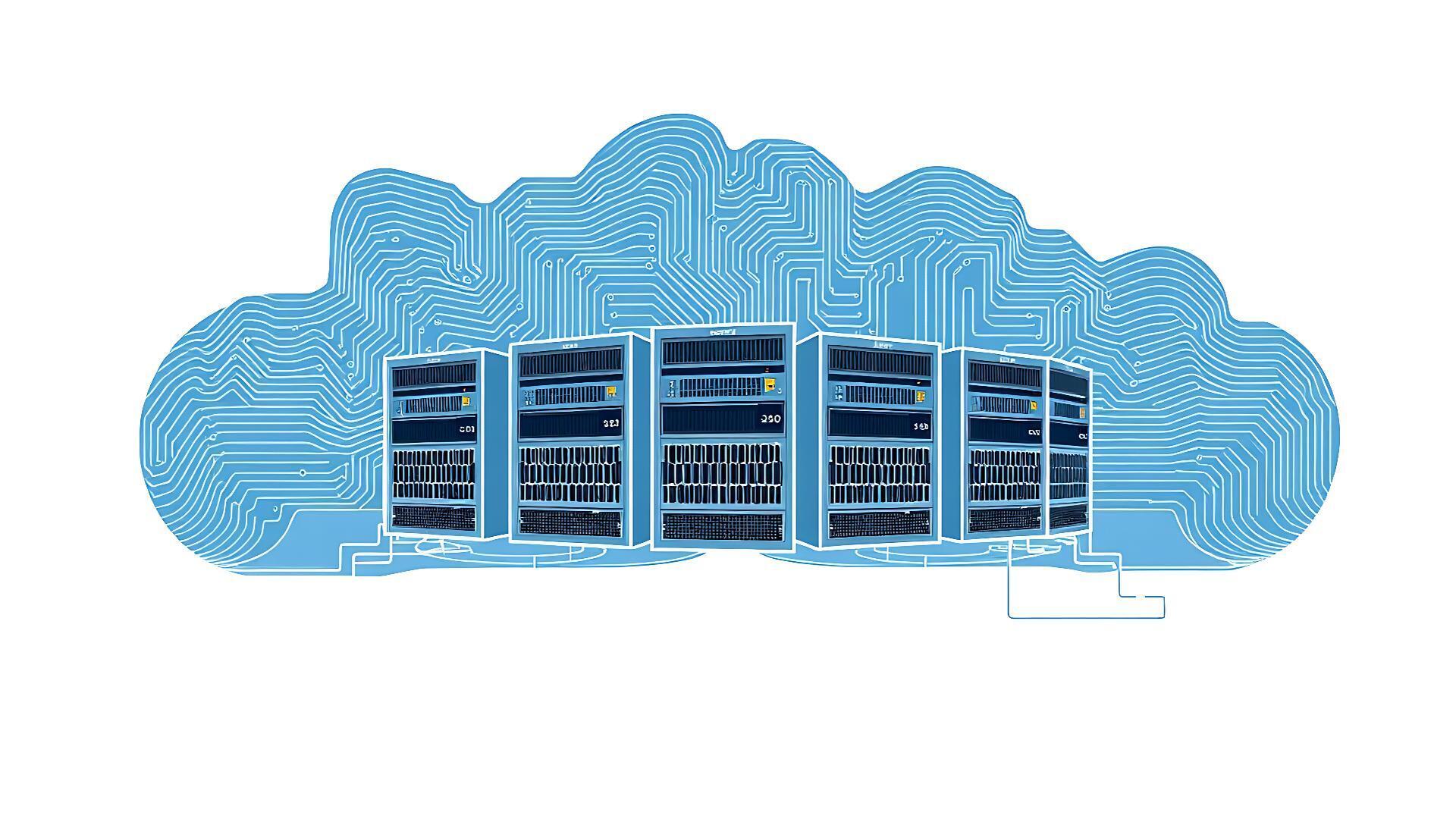
GVS5H is a distributed inference framework that coordinates multiple identical language models. It treats a cluster of smaller LLMs as a single, logical unit.
The system uses a scheduler to distribute prompts across the five worker models. For a given query, the harness can employ strategies like majority voting or score-based ranking to synthesize a final output from the five generated responses. This approach effectively aggregates the computational power and knowledge of the individual 27B parameter models.
Benchmarks and Performance Claims
The primary claim from the community testing is that the quintet of Qwen3.8-27B models achieves performance comparable to the monolithic Fable 5 model, which is estimated to have around 135 billion parameters.
While the source discussion lacks formal benchmark numbers, the principle is one of cost-to-performance. Running five 27B models can be more efficient than running one 135B model, depending on hardware utilization and task latency requirements. The harness aims to maximize total throughput by keeping all worker models constantly active.
| Feature | GVS5H (5x Qwen3.8-27B) | Single Large Model (e.g., Fable 5) |
|---|---|---|
| Total Parameters | ~135B (distributed) | ~135B (unified) |
| Inference Pattern | Parallel, high throughput | Sequential, lower throughput |
| Hardware Flexibility | Can span multiple GPUs/nodes | Requires a single, very large GPU |
| Fault Tolerance | High (one node fails, others work) | Low (single point of failure) |
How to Try the GVS5H Framework
Implementation requires setting up multiple instances of the base model and the harness coordinator. The code is available on its GitHub repository.
The first step is cloning the repository: git clone https://github.com/slee-persis/GVS5H. The setup involves configuring the model paths for each worker node in a configuration file, specifying the IP addresses and ports for the distributed setup, and then launching the coordinator. Early testers note that it works best with homogeneous model instances, like five copies of the same Qwen3.8-27B checkpoint.
"Detailed Setup Commands"
pip install -r requirements.txt. This typically includes frameworks like FastAPI, transformers, and torch.config.yaml to point to each model instance and define the worker network addresses.python worker.py --config config.yaml --worker-id 0.python coordinator.py --config config.yaml.
Pros and Cons of the Distributed Approach
This method presents clear trade-offs compared to using a single, larger model.
Advantages:
- Cost Efficiency: Five 27B models can run on lower-tier or more available GPUs (e.g., multiple RTX 4090s), which are often cheaper and more accessible than the hardware required for a 135B+ model.
- Increased Throughput: For batch processing, the system can process five prompts in parallel, potentially offering significantly higher total tokens/second.
- Fault Tolerance: The system is resilient to the failure of any single worker node.
Disadvantages:
- Per-Prompt Latency: Individual requests may be slower due to coordination overhead and synthesis logic.
- Implementation Complexity: Requires managing a distributed system, which adds operational overhead compared to a single API call.
- Synthesis Challenges: The quality of the final output depends on the harness's ability to effectively combine multiple responses, which may not always capture the nuanced coherence of a single large model.
Alternatives and Comparisons
GVS5H enters a space dominated by single-model inference servers and more advanced parallelization tools.
| Tool | Primary Use Case | Key Differentiator |
|---|---|---|
| GVS5H | Parallel inference with multiple identical models | Aggregates outputs from several models for high-throughput or combined reasoning |
| vLLM | High-throughput serving for a single, large model | Optimized attention algorithms (PagedAttention) for maximum speed on one model |
| Hugging Face TGI | Production serving for single models | Feature-rich (Tensor Parallelism, flash attention) with built-in safety and monitoring |
| Simple Load Balancer | Distributing traffic across model replicas | Doesn't synthesize outputs; just spreads load for scalability |
For tasks requiring the absolute lowest latency per prompt, vLLM or TGI with a single powerful model is superior. For batch jobs where overall job completion time and hardware cost are the main constraints, GVS5H's approach is compelling.
Who Should Use This Harness
The GVS5H harness is a specialized tool for specific engineering scenarios.
Use this if:
- You have access to multiple mid-tier GPUs but not a single ultra-high-memory GPU.
- Your workload is batch-oriented and you prioritize total throughput over individual response time.
- You are experimenting with model ensembles and need a framework to manage parallel inference and output synthesis.
Avoid this if:
- You require low-latency responses for interactive applications like chatbots.
- Your infrastructure team lacks experience with distributed system management.
- You can already efficiently run your target model (e.g., a 70B model) on available hardware with standard tools like vLLM.
Bottom line: GVS5H is a pragmatic engineering solution that trades per-query latency for cost-effective scalability, proving that model intelligence can be usefully distributed.
The emergence of tools like GVS5H signals a maturation in inference engineering, where brute-force scaling of single models is no longer the only path to greater capability. The future of efficient AI may lie in clever orchestration of smaller, more manageable components.






Top comments (1)
thanks bro