
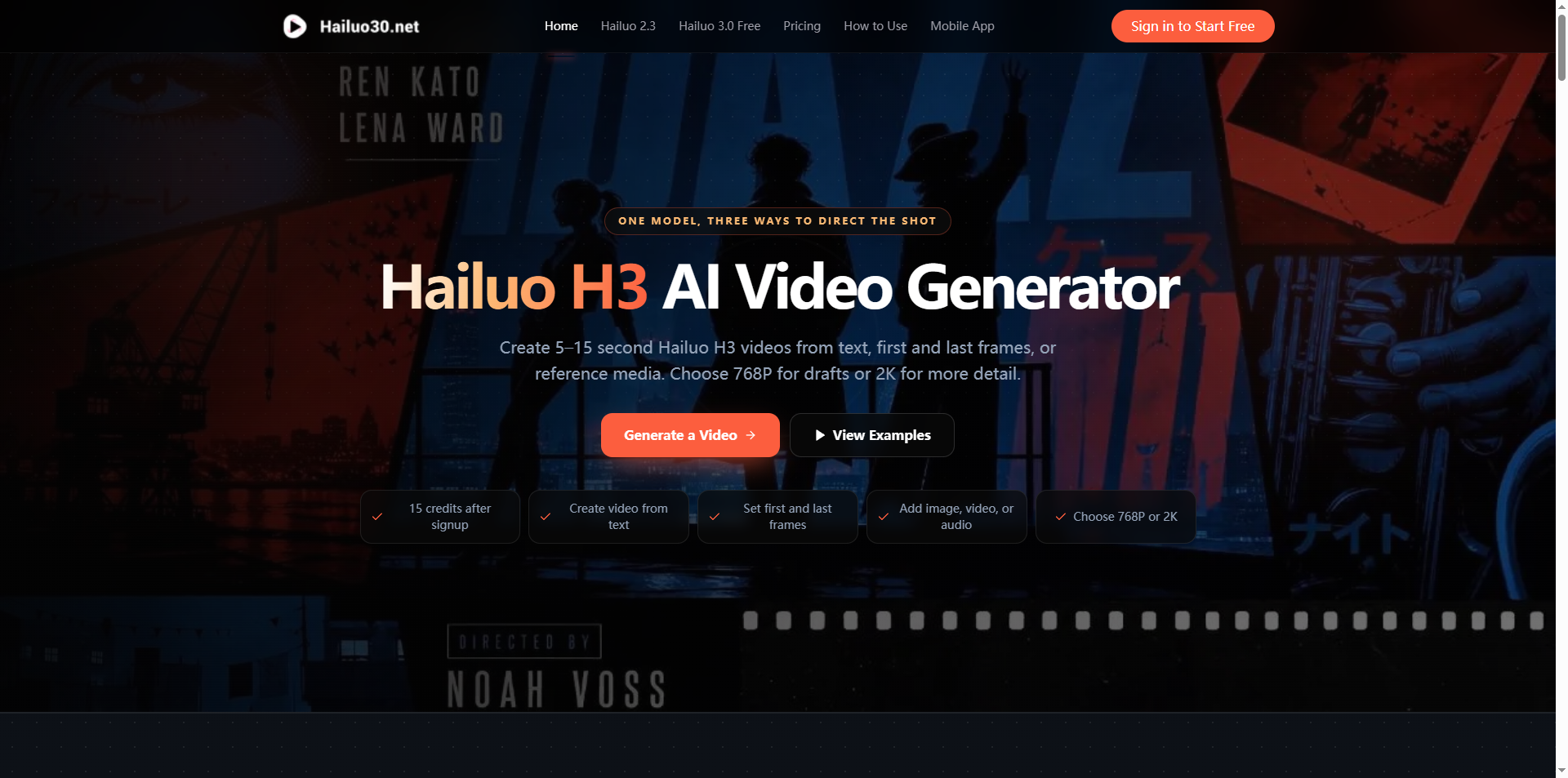

If you have spent any time experimenting with text‑to‑video AI tools, you have almost certainly run into common frustrations. You craft a detailed prompt, hit generate, and receive footage that misses your character design, ignores your camera direction, or delivers silent clips that require heavy post‑production editing. Many popular AI video generators rely exclusively on text input, leaving creators with very little practical control over the final visual result. For prompt engineers, motion designers, social creators, marketers and game concept artists, this gap between creative vision and generated output creates unnecessary friction. This is exactly where Hailuo H3 differentiates itself from crowded AI‑video competition.
The biggest competitive advantage comes from its omni‑reference creative workflow. Unlike tools limited to text prompts alone, this model lets you combine multiple types of reference assets in a single generation request. You can upload reference images to lock character appearance or art style, short sample video clips to copy specific camera movements, and reference audio tracks to guide rhythm and atmosphere. This multi‑reference capability solves one of the most persistent pain points for prompt‑based video creation: random, inconsistent outputs. Instead of rewriting prompts dozens of times hoping for matching results, you feed the model real visual and audio examples of exactly what you want to replicate. You can mix‑and‑match assets to retain a character’s face while changing background, lighting or shot composition.
Beyond multi‑reference support, Hailuo H3 ships with multiple practical generation modes built for real‑world creative pipelines. Text‑to‑video works great for brand‑new conceptual scenes. The start‑and‑end‑frame workflow lets users upload opening and closing key images, so the AI smoothly interpolates motion between two fixed visuals. This is incredibly powerful for animating static posters, product photos, illustration art and storyboard panels. You are not locked to one fixed resolution or aspect ratio. Creators can pick different aspect ratios for cinematic wide shots, square social posts and vertical short‑form reels, and select resolution options matching whether they are prototyping ideas or exporting final preview footage.
A frequently‑overlooked feature that sets this model apart is native synchronized stereo audio generation. A large number of AI video platforms output silent video files and expect creators to add sound effects, background music and character voice‑overs inside separate editing software. Here, visuals and corresponding audio are generated in one unified pass. It generates rich environmental soundscapes and supports accurate multi‑language lip‑sync for speaking characters. This drastically cuts down post‑production work, especially for teams producing large volumes of concept clips, ad drafts and social content.
The practical use cases span nearly every modern creative role. Brand and marketing teams can rapidly iterate advertisement concepts before committing to expensive physical shoots. E‑commerce creators breathe life into static product photography for social media feeds. Cinematographers and directors test shot lists, lighting setups and camera movements as pre‑visualization. Game designers build quick character animation and cut‑scene prototypes. Independent motion artists produce mood reels, animated posters and experimental short clips.
It is important to keep realistic expectations. No generative AI model delivers perfect output on every single run. You still need to refine your prompts, adjust reference materials and iterate to reach your ideal vision. Even so, the multi‑reference controls, frame‑guided animation, and integrated audio remove many of the biggest bottlenecks seen on competing platforms.
For prompt‑focused creators on PromptZone who spend hours refining prompts to get consistent, predictable AI outputs, this tool represents meaningful progress. If you are ready to move past pure‑text guesswork and take tighter command over your AI video output, explore the flexible creative workflows this model has to offer.






Top comments (0)