
If both the subject and the setting change between attempts, it is hard to tell whether a background prompt helped. Keep one foreground fixed while you test the scene.
Use a prompt with observable constraints
Empty reading desk beside a window. Soft light from the left. Clear space at the centre. No text or extra objects in the foreground.
Check those constraints separately. Did the light come from the requested direction? Is there room for the subject? Do not give a single “looks good” score to several different requirements.
Separate generation from placement
An image bg changer can be useful for the placement stage. Keep that step distinct from generating the scene. A mismatch may come from scale, edge treatment or perspective rather than from the prompt itself.
The W3C compositing specification provides a technical reference for combining layers. It does not establish whether a generated room has plausible lighting or geometry.
Change one phrase, keep the comparison
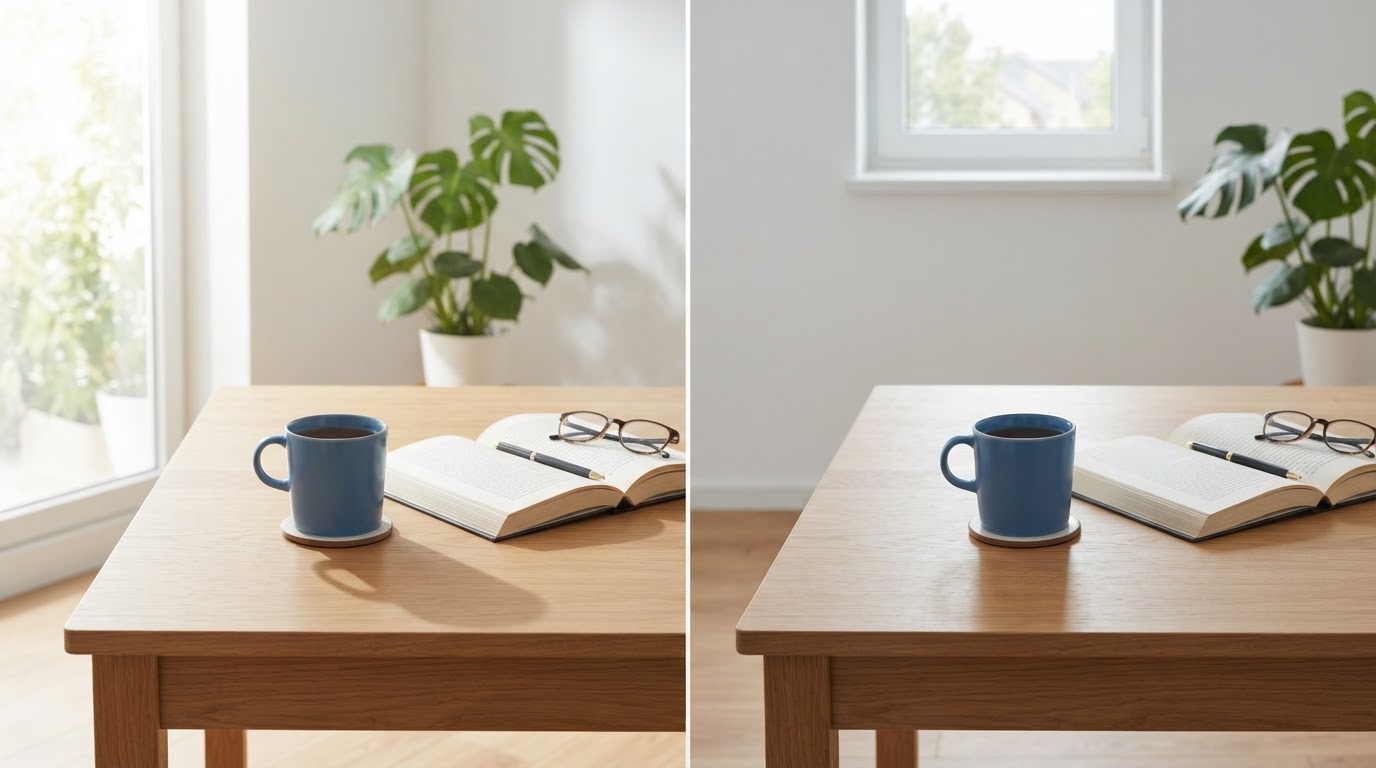
Save the prompt, scene and combined image for each attempt. Change one constraint and compare at the same viewing size. If the result fails, name the failure: “Desk perspective conflicts with the object,” for example.
Try this with an ordinary object you have permission to use. Which prompt constraint is hardest to preserve after the foreground is added? Share that constraint and the comparison conditions so replies can address a specific problem.
Keep rejected attempts too. They show which constraint changed when an attractive scene became a poor fit for the fixed subject.






Top comments (0)